
Your doctor told you physical therapy would help you recover, but three weeks in, you're not seeing much progress. Is this normal, or should PT feel different?
Not all physical therapy is created equal. The quality of care you receive directly impacts how quickly and completely you recover. Here are five clear signs that you're getting excellent physical therapy care, and why each one matters for your healing journey.
Walk into your PT session and pay attention: does your therapist pull out the same exercise sheet they give to everyone with your condition, or have they designed a program specifically for you?
Quality physical therapy starts with a comprehensive initial evaluation. Your therapist should assess not just your injury or surgical site, but your overall movement patterns, strength, flexibility, and functional limitations. They should ask about your daily activities, your work demands, your home environment, and your personal goals.
From there, they should create a treatment plan that's tailored to your specific body and situation. Two people recovering from the same knee surgery might need entirely different approaches based on their age, activity level, other health conditions, and what they need to get back to doing.
If your treatment plan feels generic or you notice other patients doing identical exercises, that's a red flag. Cookie-cutter protocols might be efficient for the clinic, but they're not what your body needs for optimal recovery.
Why it matters: Your body is unique. A one-size-fits-all approach can't account for your specific limitations, compensations, or goals. Individualized care addresses what YOU need, leading to faster, more complete recovery.
Here's a question that reveals a lot about the quality of your care: during your 45-minute or hour-long appointment, how much time do you actually spend working directly with your physical therapist or physical therapy assistant?
In some facilities, therapists manage multiple patients at once, rotating between them every few minutes while assistants supervise exercises. You might only get 10-15 minutes of direct therapist attention during your entire visit.
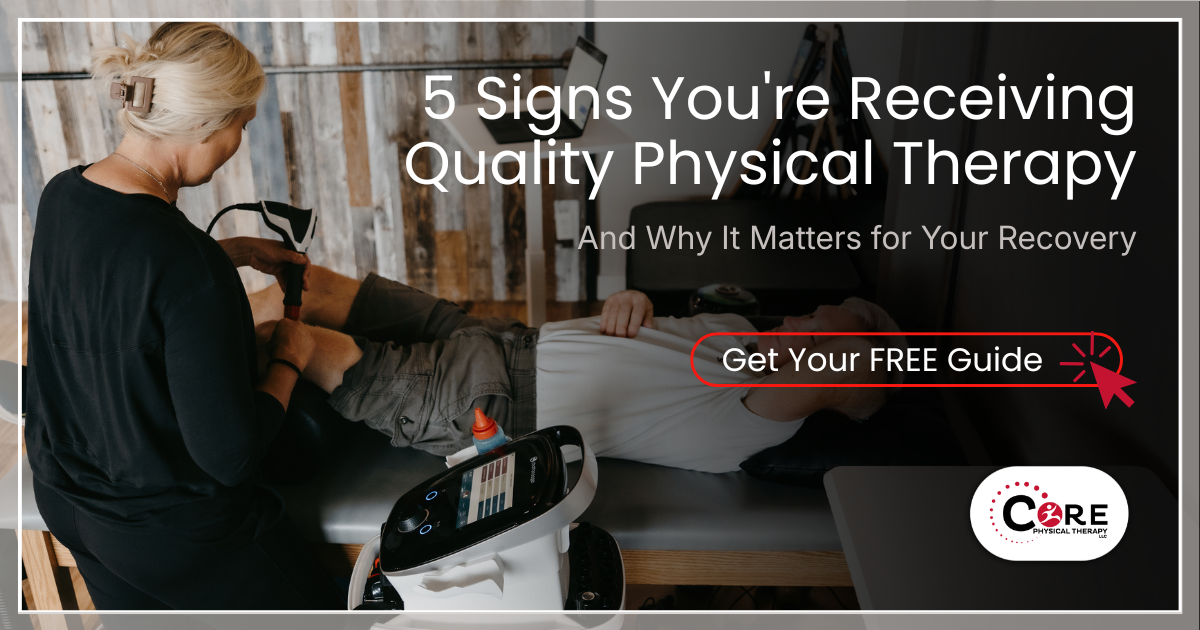
In contrast, quality PT providers offer dedicated one-on-one attention throughout your session. Your therapist is present, observing your movements, correcting your form in real-time, adjusting exercises based on how you're responding, and providing hands-on manual therapy when needed.
This focused attention is particularly crucial during the early stages of recovery. This is when you're learning proper movement patterns and your therapist needs to catch compensations before they become habits.
Why it matters: Immediate feedback and form correction prevent you from reinforcing incorrect movement patterns. Your therapist can respond to pain signals, adjust intensity on the spot, and ensure you're getting maximum benefit from every exercise. This level of attention significantly impacts your outcomes.
Think back over your recent PT sessions. Are you doing the same exercises at the same intensity as you were two weeks ago, or has your program evolved as you've gotten stronger?
Quality physical therapy is dynamic, not static. Your therapist should regularly reassess your progress and adjust your program accordingly. As you master one level of exercise, they should progress you to more challenging variations. If something isn't working, they should modify the approach.
This might mean increasing resistance, adding complexity to balance exercises, introducing new movement patterns, or transitioning from basic range-of-motion work to functional strength training. The progression should be systematic and responsive to your individual healing timeline.
If you're doing the exact same routine week after week, your body has likely adapted to those exercises and stopped making gains. You're showing up and putting in the work, but you're not being challenged appropriately.
Why it matters: Your body adapts to exercise stress by getting stronger and more capable. But once it adapts, you need new challenges to continue improving. Progressive exercise protocols keep your recovery moving forward, preventing plateaus and ensuring you regain full function.
During your session, does your therapist explain what each exercise is targeting and why it's important for your recovery, or do they just tell you what to do?
Quality physical therapists are educators as much as they are clinicians. They should help you understand your injury or condition, explain the reasoning behind each intervention, and connect the dots between specific exercises and your functional goals.
When you understand why you're doing a particular movement (strengthening the muscles that stabilize your knee, improving range of motion in your shoulder, retraining balance systems after an ankle injury), you're more likely to do your home exercises correctly and consistently. You become an active, informed participant in your recovery rather than just following orders.
Good therapists also teach you about your body, helping you recognize what's normal soreness versus concerning pain, understand what activities to avoid temporarily, and know what modifications you can make to daily tasks to protect your healing tissues.
Why it matters: Education empowers you to take ownership of your recovery. You're more motivated when you understand the purpose of your work. You make better decisions about activity modifications. And you gain knowledge that helps you prevent future injuries.
Ask yourself: does your therapist regularly test and document objective measurements like your range of motion, strength, or functional abilities? Or do they just ask "how are you feeling?" and move on with the session?
Quality PT providers use objective measures to track your progress. This might include goniometer measurements of joint angles, manual muscle testing, timed functional tests (like how long it takes you to climb stairs or how far you can walk), or standardized assessment tools specific to your condition.
These measurements serve multiple purposes. They help your therapist determine if the current treatment approach is working or if adjustments are needed. They provide concrete evidence of your improvement, which can be motivating when subjective progress feels slow. And they create documentation that shows insurance companies you're making appropriate gains.
Equally important, if you're NOT progressing as expected, objective measurements help your therapist identify the problem and modify your treatment plan. Maybe you need a different exercise approach, maybe there's an underlying issue that needs attention, or maybe you need a referral back to your physician for additional evaluation.
Why it matters: What gets measured gets managed. Objective tracking ensures your treatment is actually working, not just feeling like it might be working. It holds both you and your therapist accountable to measurable progress and allows for evidence-based adjustments to your care.
If you're reading this and realizing your current PT experience doesn't include these five elements, you have options. You're not obligated to continue with a provider whose care doesn't meet these standards.
Consider having a direct conversation with your current therapist about your concerns. Sometimes, simply asking for more explanation or requesting a more personalized approach can improve your experience.
If that doesn't resolve the issue, remember that you can switch physical therapy providers. Many people don't realize this is an option, but you have the right to transfer your care to a provider whose approach better meets your needs. The process is straightforward, and a quality provider will welcome you and make the transition smooth.
The gap between mediocre physical therapy and excellent physical therapy isn't just about comfort or satisfaction. It directly impacts your recovery timeline, how completely you heal, and whether you return to your full activity level.
Quality care means you heal faster because your program is optimized for your specific needs. You heal more completely because proper progression prevents plateaus. You're less likely to re-injure yourself because you've learned correct movement patterns and understand how to protect your body. And you're more confident in your recovery because you've been educated and empowered throughout the process.
Your recovery is too important to settle for anything less than care that includes all five of these signs. You deserve a provider who sees you as an individual, gives you focused attention, challenges you appropriately as you improve, educates you about your body, and tracks your progress with objective measures.
Want to experience all five signs of quality care?
Core Physical Therapy in Sheridan offers one-on-one, personalized rehabilitation that progresses with your recovery. Every session is designed around your specific needs, goals, and healing timeline.
Call us at 307-672-5000 or visit coreptwyo.com to schedule a free consultation and see the difference quality PT makes.
.png)
.png)