
You assumed physical therapy meant working one-on-one with a therapist for your full session. But that's not always how it works. Here's what you need to know about different PT models, and which is best for your recovery.
When most people picture physical therapy, they imagine working individually with a therapist who guides them through exercises, provides hands-on treatment, and gives their full attention throughout the appointment. This certainly happens in some clinics, but physical therapy facilities actually operate under several different models that can significantly impact your experience and outcomes.
Understanding these models before you commit to a provider helps you make an informed choice about where you'll receive care.
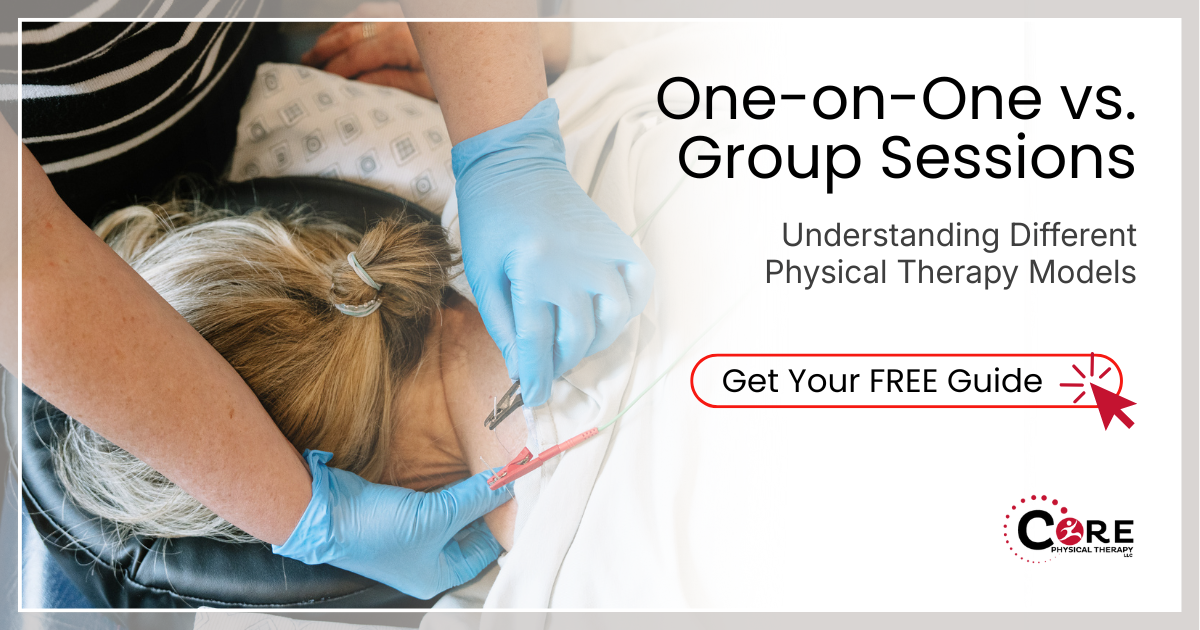
In a true one-on-one model, you receive your therapist's or physical therapy assistant's undivided attention for your entire appointment time. If your session is scheduled for 45 minutes or an hour, that therapist or assistant works exclusively with you for that full duration.
During this time, they guide you through exercises with immediate form corrections, provide hands-on manual therapy techniques, educate you about your condition and recovery, monitor your pain and fatigue responses in real-time, and adjust the session based on how you're responding that particular day.
This model offers several advantages, particularly during post-injury or post-surgery recovery:
The limitation of this model is practical: it's more expensive to operate and may limit appointment availability. However, many patients find the investment worthwhile for the quality of care and speed of recovery it enables.
In a shared model, one therapist manages two or three patients simultaneously during overlapping appointment times. You might spend 15-20 minutes working directly with your therapist, then 15-20 minutes doing exercises more independently while they work with another patient, then another period of direct attention.
Therapists using this model typically design sessions so that patients alternate between exercises requiring direct supervision and those that can be performed more independently. When you're doing your independent exercises, the therapist remains nearby and available for questions, but their primary attention is with another patient.
This model can work reasonably well in certain situations:
The challenges with this model include:
Some facilities offer group physical therapy sessions where one therapist supervises multiple patients (sometimes 4-6 or more) performing exercises. These often involve patients with various conditions working through their individual programs in the same space with periodic check-ins from the supervising therapist.
Group models are most appropriate for:
Group models are generally not ideal for:
Some clinics use hybrid approaches, combining elements of different models based on where you are in recovery. You might receive one-on-one care for your first several sessions when education and proper form are most critical, then transition to a shared model as you become more independent, and perhaps eventually join group sessions for long-term maintenance.
Well-implemented hybrid models can offer good value by providing intensive care when you need it most while being more cost-effective as you progress. The key is that transitions should be based on your actual readiness, not just an arbitrary timeline.
Many patients don't think to ask about care models before starting physical therapy, then feel disappointed or frustrated when the reality doesn't match their expectations. Here's how to get clarity upfront:
Reputable providers will answer these questions clearly and honestly. If someone seems evasive or acts like these are inappropriate questions, that tells you something important.
The best model for you depends on several factors related to your specific situation.
Consider one-on-one care if:
A shared model might work if:
Group sessions are appropriate if:
For most people recovering from injury or surgery, one-on-one care during at least the initial phase of treatment offers the best outcomes. The focused attention ensures you learn proper movement patterns, receive appropriate manual therapy, and progress safely through critical early healing stages.
At Core Physical Therapy, we believe complex recovery deserves undivided professional focus. We provide one-on-one attention throughout your session because we've seen how this model consistently produces better outcomes for our patients.
When you're working hard to heal and regain function, you deserve a therapist who's completely present with you, catching every compensation, adjusting to your daily variations, and providing the hands-on care that accelerates recovery. This isn't just about feeling valued (though that matters too). It's about creating the conditions for optimal healing.
We recognize this model isn't necessary for every person in every phase of care. But for patients in active rehabilitation from injury, surgery, or significant pain and dysfunction, focused one-on-one care makes a measurable difference in how quickly and completely you recover.
Now that you understand the different models physical therapy clinics use, you can ask informed questions and choose a provider whose approach aligns with your needs and preferences.
There's no single right answer for everyone, but there is a right answer for you based on your condition, your phase of recovery, your learning style, and your priorities. The important thing is making that choice consciously rather than discovering after you've started treatment that the model doesn't match what you expected or need.
Your recovery matters too much to leave this aspect to chance. Ask the questions, understand the model, and choose accordingly.
Core Physical Therapy guarantees one-on-one attention for your full session because we believe complex recovery deserves undivided professional focus.
Experience the difference during your first visit.
Call us at 307-672-5000 or visit coreptwyo.com to schedule your consultation.
.png)
.png)